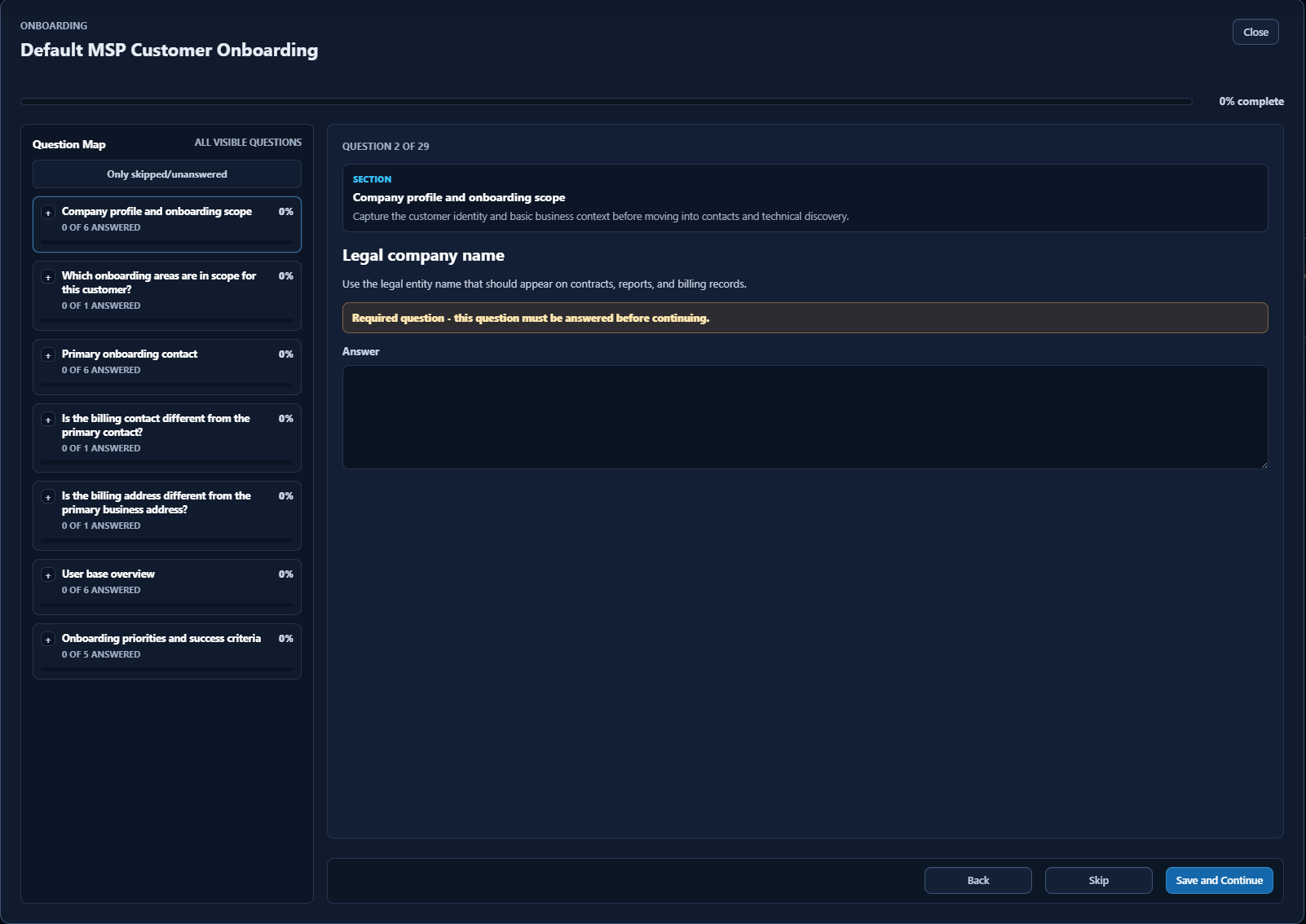
Scope the customer
Create the customer record, define sites and scope, and keep contacts, discovery status, assessment history, and open items together.
Platform Overview
TraceDown gives MSPs one working system for customer infrastructure intelligence, risk review, compliance evidence, and assessment history. It is designed for teams that need to explain what exists, how it is connected, and what should be fixed first.
Workflow
TraceDown is organized around repeatable customer review work. Each customer has its own assets, relationships, findings, questionnaires, evidence, overrides, and assessment history, while the MSP keeps a clear view across the client base.
Create the customer record, define sites and scope, and keep contacts, discovery status, assessment history, and open items together.
Collect asset details, exposed services, operating system data, network identity, installed software, and infrastructure signals.
Review how systems connect: virtual hosts, servers, network boundaries, communication paths, exposed services, and dependencies.
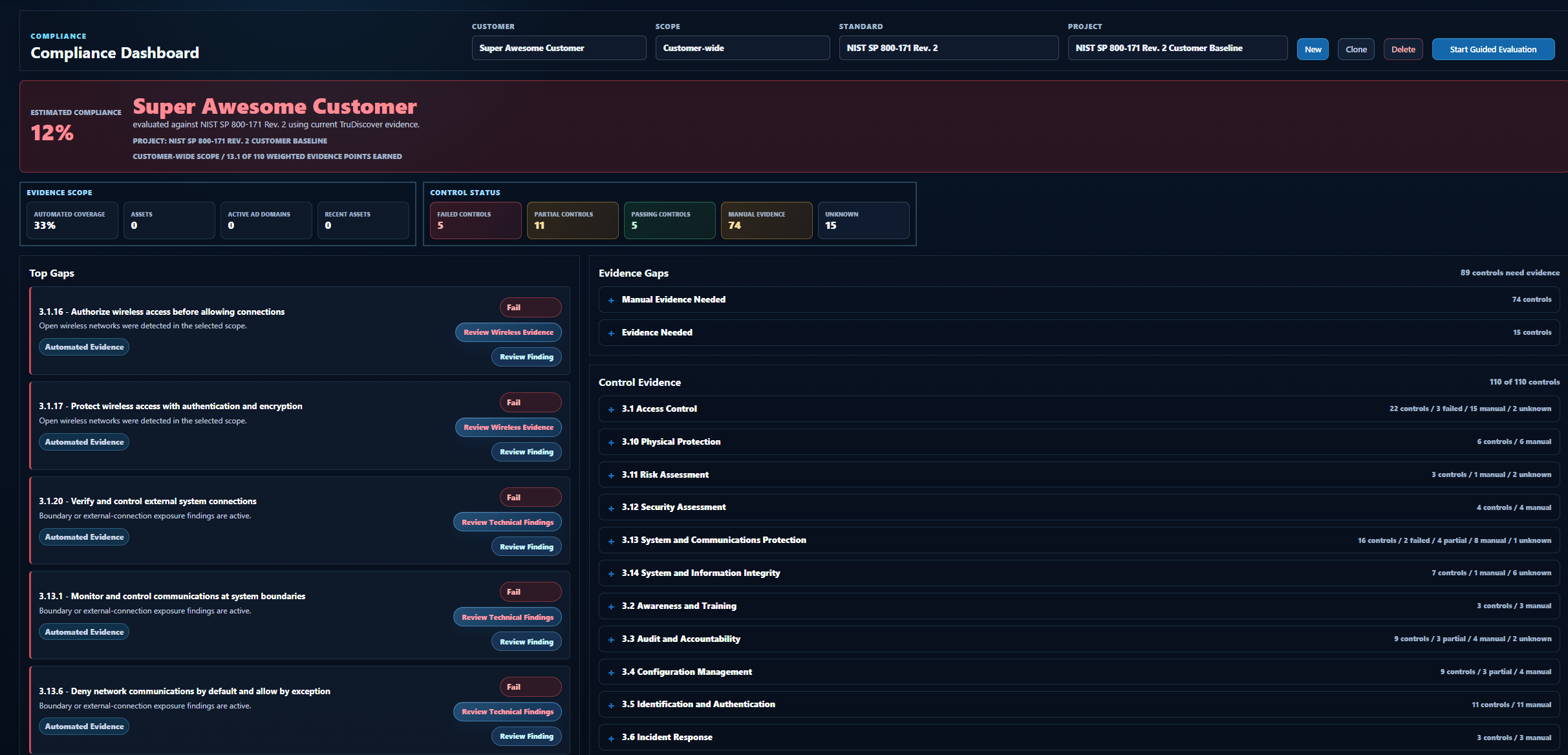
Work findings through risk review, control review, evidence collection, uploads, overrides with justification, and customer-ready documentation.
Customer View
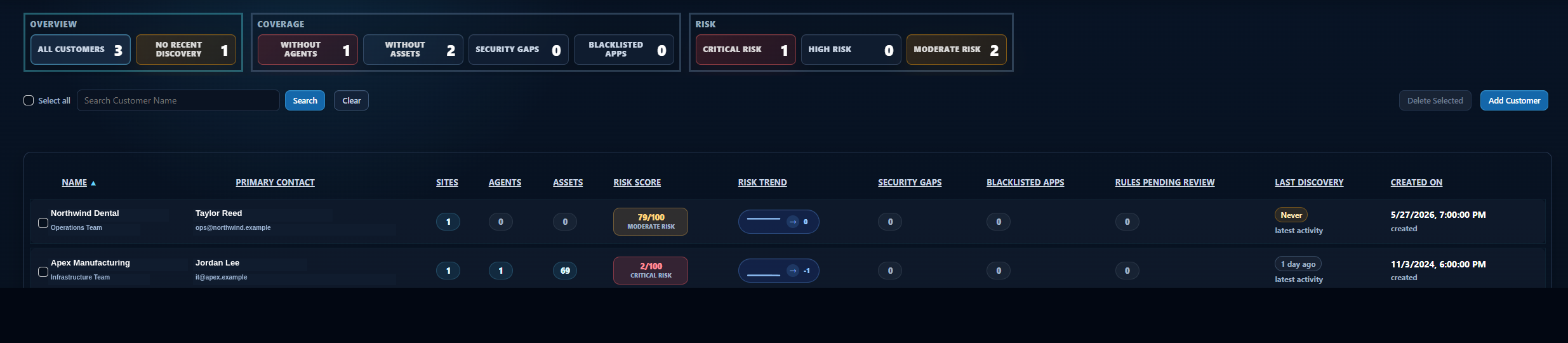
The customer view is a working queue for the MSP. It shows where risk, coverage gaps, stale discovery, and incomplete assessment work need attention.
Inventory
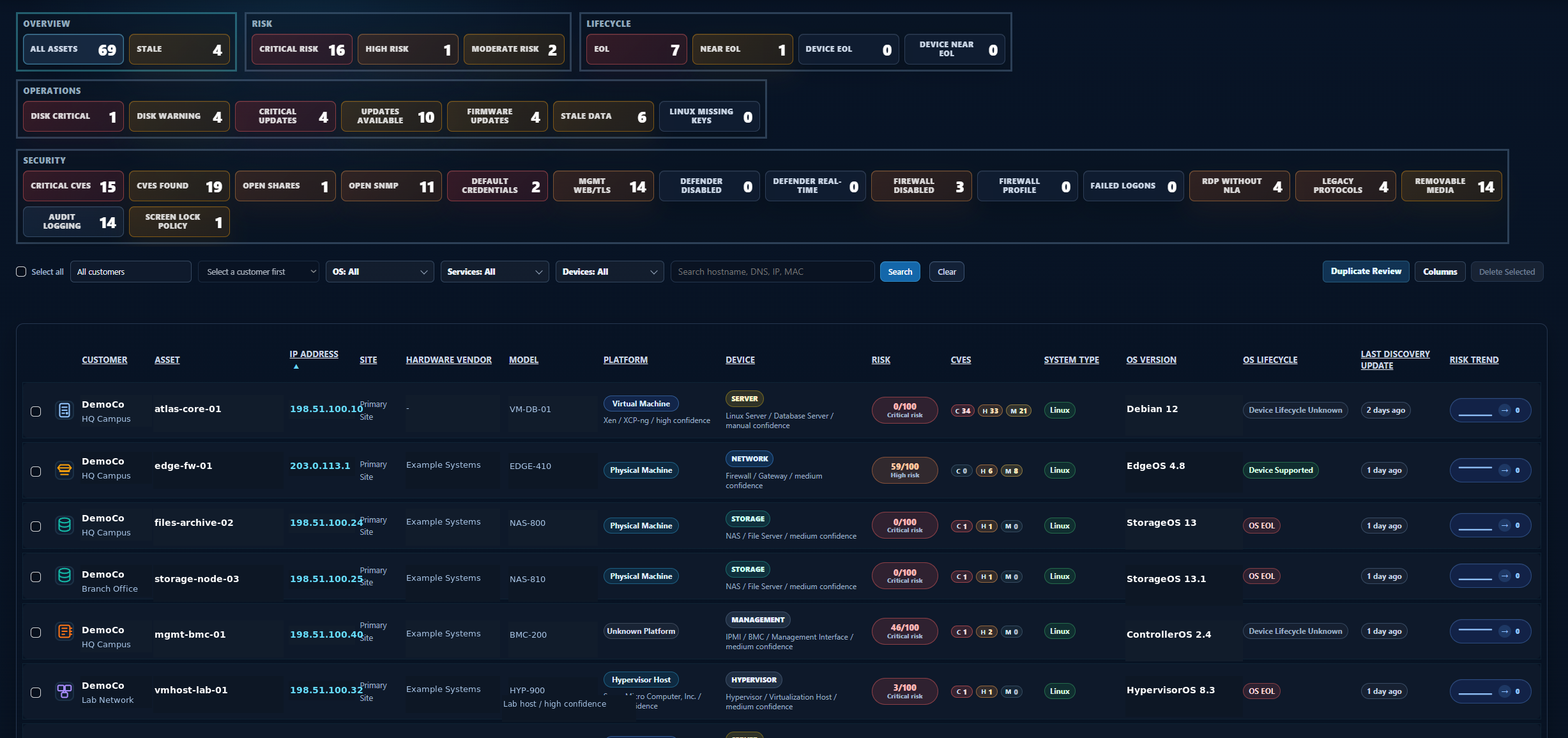
TraceDown organizes discovered asset data with operational context so technicians can review identity, services, exposure, operating system details, and customer scope from the same place.
Infrastructure Mapping
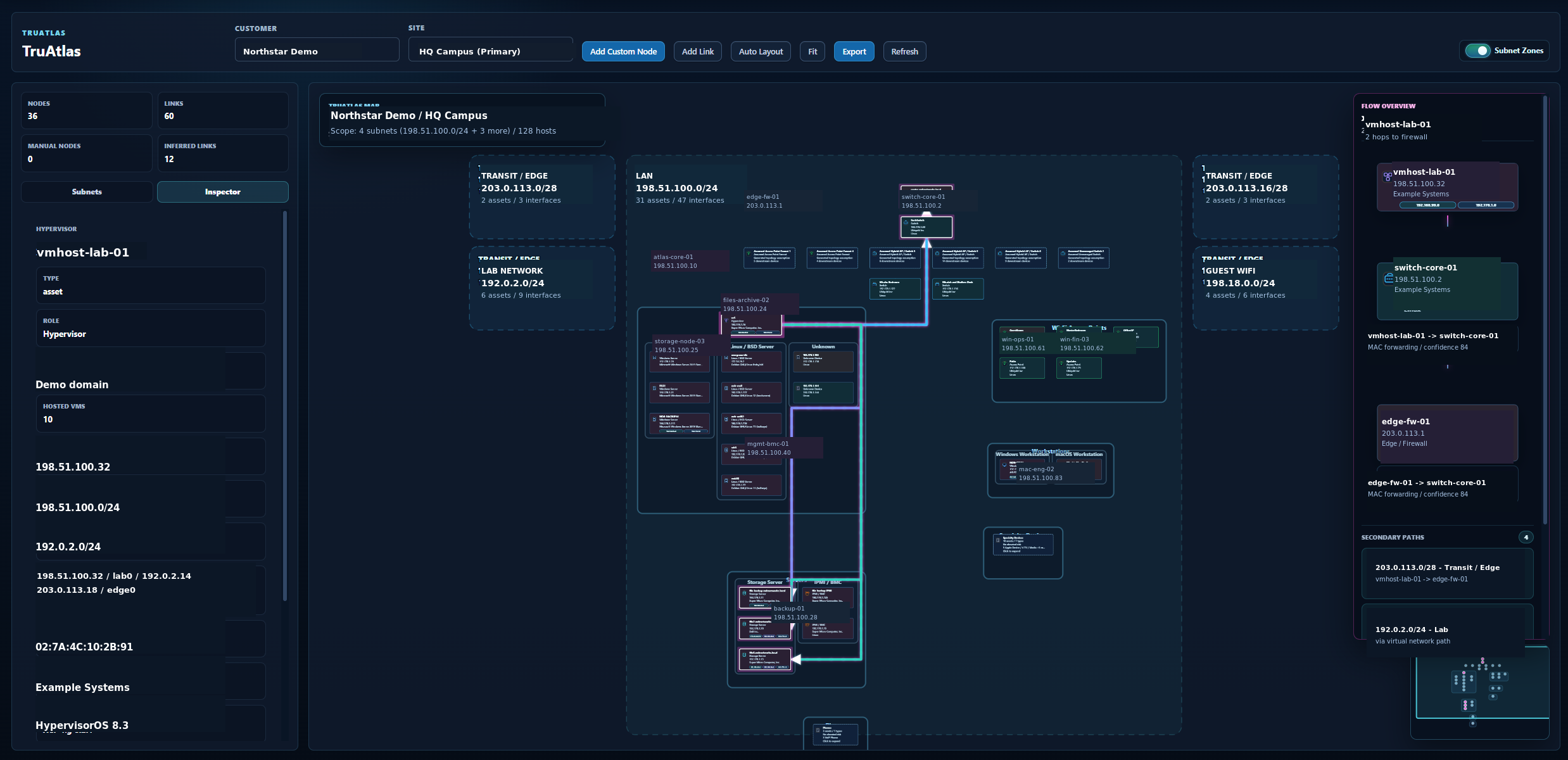
Most tools show devices. TraceDown is focused on how systems relate to each other: where traffic flows, which systems depend on shared infrastructure, and why a finding matters to the customer environment.
Compliance Workflow
TraceDown supports guided control reviews, questionnaires, documentation uploads, historical projects, and override decisions with justification. Evidence stays connected to the customer, framework, and assessment history.
Assessment Delivery
TraceDown is intended to help MSPs and consultants deliver practical security and compliance assessments for frameworks such as NIST, CIS, CMMC, HIPAA, and similar customer requirements.
Find the systems, services, relationships, and configuration details needed to investigate and remediate issues.
Explain customer risk with evidence, infrastructure context, and a clear record of what was reviewed.
Keep questionnaires, findings, evidence, overrides, and reporting aligned to the same assessment history.
Explore related pages